Tree roots and clay sewer lines in older neighborhoods
Older foothill neighborhoods often still have clay sewer laterals, and clay joints are where tree roots find their way in.
Why roots go for sewer lines
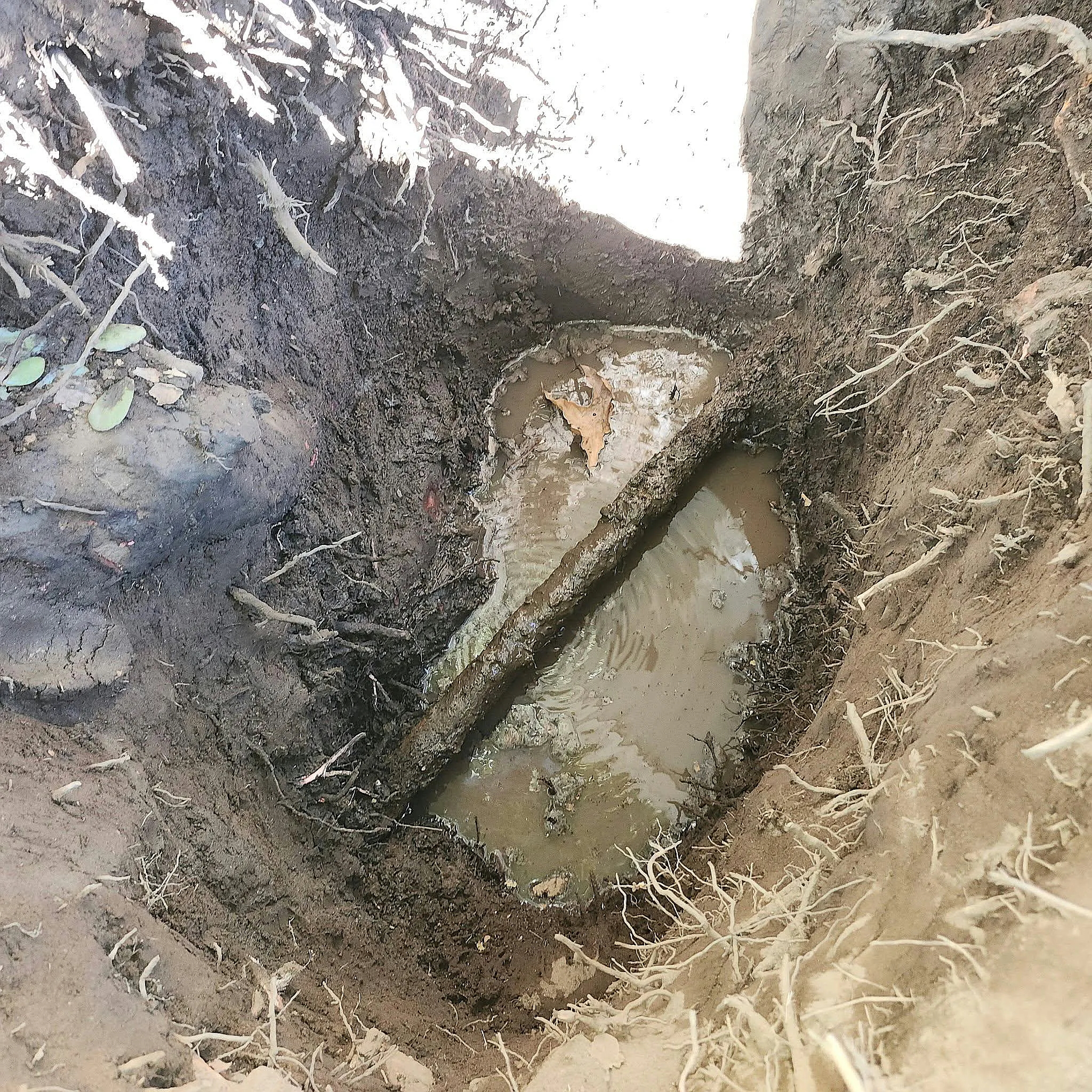
A sewer lateral carries warm, wet, nutrient-rich water — exactly what a root is looking for. Clay pipe is laid in short sections, and every joint is a possible opening. Once a fine root gets through, it grows inside the pipe and catches everything that flows past it.
The pattern it causes
- Slow drains that come and go
- Backups that get more frequent over time
- Gurgling toilets
- A line that clears, then clogs again months later
Roots that are cut back will grow again. The camera tells us whether cleaning is enough or the pipe needs repair.
What can be done
Cutting roots out of the line restores flow, and in many cases that is the right first step. If the camera shows cracked or broken sections, the longer-term fix is repairing or replacing the damaged part of the line. Knowing which kind of pipe is in the ground — clay, cast iron, or newer ABS — changes the repair, the parts on the truck, and the price we quote.
We repair and replace sewer lines across the Inland Empire. Tell us what the drains are doing and we will start with a diagnosis.